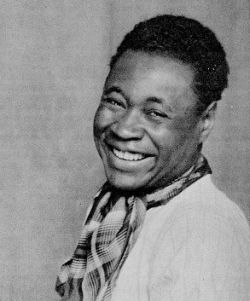
McKay’s work written in Jamaican English serve as an obvious reminder of his heritage, and also as a backbone and inspiration to the later, and perhaps better crafted Creole verse that emerged in Jamaica. Even his work in the United States, however, shows the great influence of his heritage. McKay’s move to the United States marked a transformation in his writing style; he began to model poets from the Renaissance and Romantic period, and also replaced the colloquial tongue of his homeland with Standard English. This revival of his style, however, did not alter his subject choices; and he brought to the Sonnet “the pain, rage, and longings of an Afro-Caribbean immigrant” (Norton 499). Here, he spans a gap between a strict older form and the intense tension created by a life between cultures. His work deals with his feeling of separation from African culture, alienation, and the relations in race and class society. In his first collection, Songs of Jamaica, especially, this relationship, though acknowledged to be problematic, took on an overarching positive light; that “interracial understanding and love were possible”, and that the peasant Jamaicans could learn from their white neighbors (Hansell 132).
In addition, McKay is considered “one of the first [Renaissance style writers] to express the spirit of the New Negro” (Cooper 297); he was already receiving recognition as a fresh voice in African American literature before the Negro Renaissance truly began. Arriving in the United States from Jamaica in his early twenties, McKay found himself unprepared for the great racial tension and blatant prejudice of America- a mindset foreign to his Caribbean and Songs of Jamaica roots. Slowly, McKay began reestablishing himself as a poet, even as he faced the struggles of race riots and the Great Red Scare. Through all this, however, McKay’s work bloomed and expanded, acknowledging with pieces such as If We Must Die both “tragic hopelessness” and “that in Negroes the spirit of human courage remained fully alive” (Cooper 301). This poem in particular had the greatest impact on the Negro world, with its theme resounding in the hearts of his neighbors and in Ernest Gaines’ novel A Lesson Before Dying. His work continually expressed his interest and concern in the Negro interest, especially the difference between the stereotypes of a naïve, childlike race, and his own worldly, educated view.
McKay was unlike the other members of the New Negro movement by nature of his travel and experiences, and yet, he “represented much that was characteristic of the New Negro” (Cooper 305); including his movement from his rural Jamaican hometown to the urban American north, the importance and value of the Negro in his works, and his breaking free of a limited or isolationist mindset. He remained a proponent of the common Negro, the dignity of the culture, and of tensionless relationship between race and class.
Works Cited
Cooper, Wayne. "Claude McKay and the New Negro of the 1920's." Phylon 25.3 (1964): 297-308. Web.
Hansell, William H. "Some Themes in the Jamaican Poetry of Claude McKay." Phylon 40.2(1979): 123-39. Web.
Ramazani, Jahan, Richard Ellmann, and Robert O'Clair. The Norton Anthology of Modern and Contemporary Poetry. New York: W.W. Norton, 2003. Print.

No comments:
Post a Comment