Happy Birthday Grandmommie!!
I'll call you later, it has been a long couple of days, but I know you'll see this. I love you!
Thursday, June 17, 2010

Monday, May 31, 2010
You come from far away, with pictures in your eyes
I walked Santa Ana again tonight, farther this time; winding aimlessly up and down the streets. Andar a la deriva: to walk adrift. I’m falling more and more in love with this little place. I want to take pictures
Julie mentioned the other day that she could live here, in Santa Ana. We had just returned from this past weekends’ adventures, and I immediately disagreed- after seeing the countryside and the mountains between here and Poas, I know there are other places in Costa Rica where I would rather spend the rest of my life. But looking back, I could live here. There are always going to be stunning places, visually spectacular places, and those draw me in- but Santa Ana has a quaint, attractive charm. I feel safe here.
Students were playing at the music school, and I altered my route to wander by. A woman noticed my lingering as she passed and told me that the school teaches all kinds of music, she mentioned folk music and specific instruments- the girl we were listening to was playing a xylophone type instrument that’s evidently very traditional. The music it created was very sweet.
Today was quiet; others complained of slipping into a typical Monday down, but I was lucky enough to not catch it.
We’ve started Realism in my Literature class- we read a short story today “A la deriva”; which is basically about an indigenous man who is bit by a snake, goes thorough a series of tortuous reactions to the bite, and dies alone in his canoe as he lets the river carry him towards help. It’s a riot to read, let me tell you- but it fits into the morbid-ness of realism quite well. We’ll end the week with Magical Realism and dose of Gabriel Garcia Marquez, which makes me happy.
Culture went really well today, Emilce was quite happy with me because I was an active part of the conversation, and I was happy with me because I didn’t freeze up over answering questions or translating in my head. The two of us bonded a bit by gossiping over the boys while they were gone for a bit; her opinions amuse me greatly.
I spent some quality time with Bruto, the family husky, this evening. He- like every other dog here- barks at anything that moves, but he’s not nearly as intimidating as he pretends to be.
But thn again, few things, animals, people are.

He’s sweet, but Mike is still my favorite… and would be much easier to smuggle out… Every morning he joins me as I get ready for school, and he’s usually lounging on my bed when I return home in the afternoons. Oh to live the life of a cat!
Mi madre aqui and I had a wonderful chat this evening. She told me all about her family, and the surrounding gossip. Her grandmother had twenty children- ten of whom are still alive today- so there’s quite a bit of information to be had. She and her mom have a wonderful relationship; they still have breakfast together every morning. I love how close families stay here, it makes me wish mine wasn’t spread so far out across the country.
I’m heading out to meet up with the group; I think we’re going to another little city nearby this evening.
Beautiful night!
Lluvia
Julie mentioned the other day that she could live here, in Santa Ana. We had just returned from this past weekends’ adventures, and I immediately disagreed- after seeing the countryside and the mountains between here and Poas, I know there are other places in Costa Rica where I would rather spend the rest of my life. But looking back, I could live here. There are always going to be stunning places, visually spectacular places, and those draw me in- but Santa Ana has a quaint, attractive charm. I feel safe here.
Students were playing at the music school, and I altered my route to wander by. A woman noticed my lingering as she passed and told me that the school teaches all kinds of music, she mentioned folk music and specific instruments- the girl we were listening to was playing a xylophone type instrument that’s evidently very traditional. The music it created was very sweet.
Today was quiet; others complained of slipping into a typical Monday down, but I was lucky enough to not catch it.
We’ve started Realism in my Literature class- we read a short story today “A la deriva”; which is basically about an indigenous man who is bit by a snake, goes thorough a series of tortuous reactions to the bite, and dies alone in his canoe as he lets the river carry him towards help. It’s a riot to read, let me tell you- but it fits into the morbid-ness of realism quite well. We’ll end the week with Magical Realism and dose of Gabriel Garcia Marquez, which makes me happy.
Culture went really well today, Emilce was quite happy with me because I was an active part of the conversation, and I was happy with me because I didn’t freeze up over answering questions or translating in my head. The two of us bonded a bit by gossiping over the boys while they were gone for a bit; her opinions amuse me greatly.
I spent some quality time with Bruto, the family husky, this evening. He- like every other dog here- barks at anything that moves, but he’s not nearly as intimidating as he pretends to be.
But thn again, few things, animals, people are.

He’s sweet, but Mike is still my favorite… and would be much easier to smuggle out… Every morning he joins me as I get ready for school, and he’s usually lounging on my bed when I return home in the afternoons. Oh to live the life of a cat!
Mi madre aqui and I had a wonderful chat this evening. She told me all about her family, and the surrounding gossip. Her grandmother had twenty children- ten of whom are still alive today- so there’s quite a bit of information to be had. She and her mom have a wonderful relationship; they still have breakfast together every morning. I love how close families stay here, it makes me wish mine wasn’t spread so far out across the country.
I’m heading out to meet up with the group; I think we’re going to another little city nearby this evening.
Beautiful night!
Lluvia
Friday, May 21, 2010
Tremors!
So there was an earthquake here yesterday afternoon!
It actually didn't happen in Costa Rica, but in the ocean- on the news it looked like the pacific side. It was a 6.1 though, so it was felt even here. Julie, Marisa, Caleb and I were walking home during it, so to our great disapointment, we didn't feel anything. Anyone who was inside or was stationary at the time did though- when the four of us got to Julie and Marisa's house, their family told us about it- the hanging plants were still swinging back and forth, and the dogs were all freaking out.
Jeri Lynn and Mandy were sitting on their porch in Conversa, and they said all the doors started fluttering and it sounded like thunder. Jeri Lynn swears that she thought she was in a war zone.
My host dad told me that earthquakes are common this time of year- when the seasons change.
It doesn't seem like there was any damage to speak of as a result, which I'm thankful for. I just wish we could have felt it!!
Anyway, we have an awesome weekend ahead of us. We're going to Puerto Viejo for a zipline/ canopy tour/ ATV ride/ tree climbing and waterfall repelling adventure! I'm so excited!!!
Have a beautiful weekend!
Lluvia
It actually didn't happen in Costa Rica, but in the ocean- on the news it looked like the pacific side. It was a 6.1 though, so it was felt even here. Julie, Marisa, Caleb and I were walking home during it, so to our great disapointment, we didn't feel anything. Anyone who was inside or was stationary at the time did though- when the four of us got to Julie and Marisa's house, their family told us about it- the hanging plants were still swinging back and forth, and the dogs were all freaking out.
Jeri Lynn and Mandy were sitting on their porch in Conversa, and they said all the doors started fluttering and it sounded like thunder. Jeri Lynn swears that she thought she was in a war zone.
My host dad told me that earthquakes are common this time of year- when the seasons change.
It doesn't seem like there was any damage to speak of as a result, which I'm thankful for. I just wish we could have felt it!!
Anyway, we have an awesome weekend ahead of us. We're going to Puerto Viejo for a zipline/ canopy tour/ ATV ride/ tree climbing and waterfall repelling adventure! I'm so excited!!!
Have a beautiful weekend!
Lluvia
Wednesday, May 19, 2010


Tuesday, May 18, 2010
ii Pejiballe !!
It's a palm fruit!

Chao,
Lluvia

The white part is mayonnaise! This is a snack prepared by María José (she’s related to Julie and Marisa’s host family), it’s a gourd-like food she peeled and sliced and is evidently served with mayonnaise. The flavor and texture of the gourd reminded me of butternut squash- it was quite delicious actually! It’s quite a combination, whoever would have thought?

María José is helping us with our tarea….mostly Julie with her grammer. She’s got to be the most patient twelve year old…. we’re having an interesting conversation; she finishes most of our sentences for us. Thank the good Lord that laughter is a universal language.


María José is helping us with our tarea….mostly Julie with her grammer. She’s got to be the most patient twelve year old…. we’re having an interesting conversation; she finishes most of our sentences for us. Thank the good Lord that laughter is a universal language.

Chao,
Lluvia

Julie and I are currently enjoying the sauna that is her room. It seems her family is unaffected by the heat…we’re just the weak gringas. To think, some people pay for the luxury of a sauna while we get to enjoy it for free. We’ve seriously contemplated finding our bathing suits, but that’s probably not appropriate family room attire.
Don Miguel, her host father, has been telling us jokes that we don’t understand, but he thinks that he’s hilarious, so we’ve been laughing appreciatively. His grandson, Gabriel, is the cutest thing, a shy six year old boy. It has started thundering, so hopefully that means the breeze will pick up.
Wow, I sound spoiled. Truly, I wouldn’t take ac right now even if it was offered.
Today was lovely; I’m absolutely in love with my classes, so that switch didn’t take long :)
I’m absolutely amazed at how much Joan knows about literature…it’s insane. He’s legitimately a literature teacher with all he knows, I feel so lucky to have this class with him! We’re studying three time periods in literature, one for each week we’re here. I had him take me through a timeline today, from the Renaissance to today, in periods of latino literature, because it’s different from English lit.
Modernismo is not the same thing as the English Modernism. Modernismo is before World War One and coincides with Realism, Naturalism and Surrealism. Modernismo is unique to Latin-American, it’s a movement that’s limited to poetry. The equivalent of Modernism is Vanguardia, but the Spanish Vanguardia has two eras istead of splitting into Modernist and Contemporary Literature as we do. Our Contemporary Lit is linked to the second half of Vanguardia, as is a latino literature called Magical Realism (realismo mágico) that spanned from 1950-1970.
I’m addicted!
Julie and I left Conversa at one thirty today so we could exchange money at the Bank, which closes earlier than we usually leave Conversa. It seemed strange to be in the town so early. Conversa offered Yoga today, which I’m a bit disappointed to have missed, but I’m planning on making the 50 minute walk to Conversa at 6:30 tomorrow. One of the students here from Ohio walked it this morning and raved about it, so I’m eager to try. I like climbing these mountains, I wish Florida wasn’t so flat.
Anyway, tengo tarea, I have to read three poems (Modernismo) for my literature class tomorrow!
Choa mis amigos!
Lluivia
Don Miguel, her host father, has been telling us jokes that we don’t understand, but he thinks that he’s hilarious, so we’ve been laughing appreciatively. His grandson, Gabriel, is the cutest thing, a shy six year old boy. It has started thundering, so hopefully that means the breeze will pick up.
Wow, I sound spoiled. Truly, I wouldn’t take ac right now even if it was offered.
Today was lovely; I’m absolutely in love with my classes, so that switch didn’t take long :)
I’m absolutely amazed at how much Joan knows about literature…it’s insane. He’s legitimately a literature teacher with all he knows, I feel so lucky to have this class with him! We’re studying three time periods in literature, one for each week we’re here. I had him take me through a timeline today, from the Renaissance to today, in periods of latino literature, because it’s different from English lit.
Modernismo is not the same thing as the English Modernism. Modernismo is before World War One and coincides with Realism, Naturalism and Surrealism. Modernismo is unique to Latin-American, it’s a movement that’s limited to poetry. The equivalent of Modernism is Vanguardia, but the Spanish Vanguardia has two eras istead of splitting into Modernist and Contemporary Literature as we do. Our Contemporary Lit is linked to the second half of Vanguardia, as is a latino literature called Magical Realism (realismo mágico) that spanned from 1950-1970.
I’m addicted!
Julie and I left Conversa at one thirty today so we could exchange money at the Bank, which closes earlier than we usually leave Conversa. It seemed strange to be in the town so early. Conversa offered Yoga today, which I’m a bit disappointed to have missed, but I’m planning on making the 50 minute walk to Conversa at 6:30 tomorrow. One of the students here from Ohio walked it this morning and raved about it, so I’m eager to try. I like climbing these mountains, I wish Florida wasn’t so flat.
Anyway, tengo tarea, I have to read three poems (Modernismo) for my literature class tomorrow!
Choa mis amigos!
Lluivia
Monday, May 17, 2010

So evidently, my family has a dog…. It was in the front lawn today when I got home, but im not entirely sure where it has been the other days. It looks a bit like a wolf; I’ll try to get a picture up- and wouldn’t exactly be easy to hide. We have a backyard that I’ve peaked into but never fully entered. Strange though; this place is full of surprises.
This morning I was talking with Paula and I asked her why she saved the egg shells, they’re always lined up next to the sink in the morning. Other families have composts, but I’ve not seen one at my house- and all the other uneaten food is thrown away.
Evidently, egg shells are a cure for osteoporosis! Jaime told me before how Adrian had weak bones and changing his diet helped, but evidently that dietary change was egg shells. Paula’s mother also has osteoporosis. They crush the egg shells into a very fine powder and add a teaspoon to their food. It adds calcium to the meal, and helps fill in the holes in the bones. Paula told me she is not generally a fan of natural medicine, but there is no comparison in this case. Adrian had the bones of an eighty year old man- in two years he broke one of his arms five times and the other once; but after a year of this treatment, they returned to the doctor and his bones are normal.
I think that’s just the coolest thing. I want to try; it sure beats buying calcium supplements.
School today was hard, a bit overwhelming. I’m in a Latin-American Literature class first, con mi profesor Joan (sounds a bit like John), and though I understood the majority of what my professor said, it was still hard to keep up and answer questions. I got tripped up trying to figure out what he was saying, so it was hard to respond. I share the class with another student- Peter- from Michigan. He’s been at Conversa for three or four months already, and has as many remaining. Needless to say, I was a bit intimidated. I like Joan though, he’s very knowledgeable, and he is able to keep talking even without prompting, which is nice. The class feels like an interactive lecture, I like the setup.
The second class is a culture class, again with Peter, and also Caleb. I like the professor, Emilce, a lot as well, and she was gentle with me (“tranquila, tranquila”) when I got obviously overwhelmed or frustrated. She told me that she is not my professor; she is my amiga, as are my classmates. Caleb is also a better speaker than I am, but he’s not fluent to the same degree as Peter. We went on a walk during the class, as each senda (path) has a cultural component- wooden stands each with a portion of Costa Rican history written down. She had each of us read out loud…which is so much easier than trying to pull information and form it.
I’m really glad that Paula is my mom though, she returned late tonight, but asked about my day when she got in. I told her I liked my classes, but they were difficult, and she seemed genuinely confused. She asked me why they were so difficult, because she thinks I speak well. She’s good for me; I really needed to hear that. I’m trying to not let myself feel dejected, but coming home is comfortable, which helps. I also just spent a good hour or two working on my cultura homework, so I’m less freaked out for tomorrow.
It’s only the first day, and I haven’t been immersed in Spanish to this degree for a few weeks, so I know I can handle the classes. I like a challenge, and at least I won’t be bored!
John spent a few moments this afternoon analyzing each of us while he Julie and I were in the hammocks. It was interesting, to hear his take on each person of our group. He was pretty accurate, but superficial- though he’s known us for a grand total of four days, so I’ll give him a break. My analysis was last and possibly the least accurate, though he got some points completely correct. Evidently, being the quietest has made me the most challenging to figure out.
I fell asleep to the rain last night, which was lovely, but it doesn’t look like it’ll be a repeat, which is unfortunate. It’s hot tonight, and we could use a touch of my namesake.
I’m going to read another chapter or two of Ecclesiastes and call it a night. I’m terrible about the daily readings while school is in session, so my goal is to make reading my Bible a habit this summer. For my birthday last week, I asked mom and dad for a bilingual Bible, and I’m absolutely obsessed with it. Yesterday I spent time in the Spanish section as I started Ecclesiastes; it was exciting how easily I could figure it out, especially with the English column right next to the Spanish. My brain hurts tonight though, I think I’ll keep to English tonight.
Buenas noches y te amo.
Oh! On a tangent, evidently amor is less type of love and more strength of love. I was always hesitant to use the verb amor, as in Te amo when addressing friends and family because I thought it was inherently romantic. Here at least, it seems to just be a stronger amount of love- Paula uses it with her children all the time. Te quiero is either used less in Costa Rica, or is just a much weaker term.
Pues, te amo mucho,
Lluvia
This morning I was talking with Paula and I asked her why she saved the egg shells, they’re always lined up next to the sink in the morning. Other families have composts, but I’ve not seen one at my house- and all the other uneaten food is thrown away.
Evidently, egg shells are a cure for osteoporosis! Jaime told me before how Adrian had weak bones and changing his diet helped, but evidently that dietary change was egg shells. Paula’s mother also has osteoporosis. They crush the egg shells into a very fine powder and add a teaspoon to their food. It adds calcium to the meal, and helps fill in the holes in the bones. Paula told me she is not generally a fan of natural medicine, but there is no comparison in this case. Adrian had the bones of an eighty year old man- in two years he broke one of his arms five times and the other once; but after a year of this treatment, they returned to the doctor and his bones are normal.
I think that’s just the coolest thing. I want to try; it sure beats buying calcium supplements.
School today was hard, a bit overwhelming. I’m in a Latin-American Literature class first, con mi profesor Joan (sounds a bit like John), and though I understood the majority of what my professor said, it was still hard to keep up and answer questions. I got tripped up trying to figure out what he was saying, so it was hard to respond. I share the class with another student- Peter- from Michigan. He’s been at Conversa for three or four months already, and has as many remaining. Needless to say, I was a bit intimidated. I like Joan though, he’s very knowledgeable, and he is able to keep talking even without prompting, which is nice. The class feels like an interactive lecture, I like the setup.
The second class is a culture class, again with Peter, and also Caleb. I like the professor, Emilce, a lot as well, and she was gentle with me (“tranquila, tranquila”) when I got obviously overwhelmed or frustrated. She told me that she is not my professor; she is my amiga, as are my classmates. Caleb is also a better speaker than I am, but he’s not fluent to the same degree as Peter. We went on a walk during the class, as each senda (path) has a cultural component- wooden stands each with a portion of Costa Rican history written down. She had each of us read out loud…which is so much easier than trying to pull information and form it.
I’m really glad that Paula is my mom though, she returned late tonight, but asked about my day when she got in. I told her I liked my classes, but they were difficult, and she seemed genuinely confused. She asked me why they were so difficult, because she thinks I speak well. She’s good for me; I really needed to hear that. I’m trying to not let myself feel dejected, but coming home is comfortable, which helps. I also just spent a good hour or two working on my cultura homework, so I’m less freaked out for tomorrow.
It’s only the first day, and I haven’t been immersed in Spanish to this degree for a few weeks, so I know I can handle the classes. I like a challenge, and at least I won’t be bored!
John spent a few moments this afternoon analyzing each of us while he Julie and I were in the hammocks. It was interesting, to hear his take on each person of our group. He was pretty accurate, but superficial- though he’s known us for a grand total of four days, so I’ll give him a break. My analysis was last and possibly the least accurate, though he got some points completely correct. Evidently, being the quietest has made me the most challenging to figure out.
I fell asleep to the rain last night, which was lovely, but it doesn’t look like it’ll be a repeat, which is unfortunate. It’s hot tonight, and we could use a touch of my namesake.
I’m going to read another chapter or two of Ecclesiastes and call it a night. I’m terrible about the daily readings while school is in session, so my goal is to make reading my Bible a habit this summer. For my birthday last week, I asked mom and dad for a bilingual Bible, and I’m absolutely obsessed with it. Yesterday I spent time in the Spanish section as I started Ecclesiastes; it was exciting how easily I could figure it out, especially with the English column right next to the Spanish. My brain hurts tonight though, I think I’ll keep to English tonight.
Buenas noches y te amo.
Oh! On a tangent, evidently amor is less type of love and more strength of love. I was always hesitant to use the verb amor, as in Te amo when addressing friends and family because I thought it was inherently romantic. Here at least, it seems to just be a stronger amount of love- Paula uses it with her children all the time. Te quiero is either used less in Costa Rica, or is just a much weaker term.
Pues, te amo mucho,
Lluvia
Friday, May 14, 2010

I woke up this morning before the roosters crowed, literally, and it was a bit of a shock when they did. I’d seen two or three chickens pecking their way around people’s yards yesterday, pero for some reason, I did not expect to hear their male counterparts heralding the morning. The poor things seemed to be having a disagreement over when morning should actually begin, they crowed intermittently for close to two hours.
Paula told me that the next door neighbor used to have four gallos (roosters), who crowed every hour of the night until Paula thought she would go crazy, and she told the neighbor she couldn’t sleep for the noise. Now they don’t start until 5:30, which isn’t bad since the sun is already up.
I was up at 5:30 CR time, which is 7:30 Florida time- and also when Jaime leaves for work. Paula was surprised to see me up and about so temprano, but it gets light here around 5, so there was no way I was going back to sleep. It gets dark here early as well- cerca de 6 o 6:30. Paula encouraged me to go walking early in the morning, so see Santa Ana, pero I didn’t know the area yet. There’s a walking trail to the Conversa campus that takes about 45 minutes, and I’ll be walking that as often as I can; so hopefully I’ll get my fill of early morning walks!
It’s strange to me, shoes are worn in the house here. Paula gave me keys and showed me how to work the porto (the outside gate) este mañana, y cuando regresamos a la casa, she was concerned for mis pies porque hay un small patch of gravel we had to walk over. I need to remember to keep mine on, at least flip flops, but as much as I loathe shoes that may be the one cultural aspect I don’t adhere to. Nos veríamos.
Sorry Mamí, it’s just so hard to write fully in English right now.
At 7:30 ish, Josue walked me first to the abuela’s house where I met una prima from New York. She’s been living there for decades, and caught me by surprise when she started speaking English with me. I never know who here is bilingual and who is not. Entonces, Josue took me to the Conversa bus stop (and then went on to school), passing la casa where Julie and Marisa are living. I met a woman from Utah briefly at the bus stop, but as the other students were all in classes, the eight of us stuck together for most of the day. I really like the other people in my group, we get along splendidly.
I’m the quietest in the group, it’s a shocker, I know, since that’s never happened before. It’s amusing, because I always receive the same treatment in these situations- I’m teased for being the “troublemaker”: about being watched in case of heavy partying and the like. John started it I believe, but Caleb is not far behind. I’m not in my shell, per sé, but they’re all naturally louder, and I’m not one to fight for verbal center stage. Besides, with all the tricksters and jokers that make up my family and close friends, this is just like coming home.

I was up at 5:30 CR time, which is 7:30 Florida time- and also when Jaime leaves for work. Paula was surprised to see me up and about so temprano, but it gets light here around 5, so there was no way I was going back to sleep. It gets dark here early as well- cerca de 6 o 6:30. Paula encouraged me to go walking early in the morning, so see Santa Ana, pero I didn’t know the area yet. There’s a walking trail to the Conversa campus that takes about 45 minutes, and I’ll be walking that as often as I can; so hopefully I’ll get my fill of early morning walks!
It’s strange to me, shoes are worn in the house here. Paula gave me keys and showed me how to work the porto (the outside gate) este mañana, y cuando regresamos a la casa, she was concerned for mis pies porque hay un small patch of gravel we had to walk over. I need to remember to keep mine on, at least flip flops, but as much as I loathe shoes that may be the one cultural aspect I don’t adhere to. Nos veríamos.
Sorry Mamí, it’s just so hard to write fully in English right now.
At 7:30 ish, Josue walked me first to the abuela’s house where I met una prima from New York. She’s been living there for decades, and caught me by surprise when she started speaking English with me. I never know who here is bilingual and who is not. Entonces, Josue took me to the Conversa bus stop (and then went on to school), passing la casa where Julie and Marisa are living. I met a woman from Utah briefly at the bus stop, but as the other students were all in classes, the eight of us stuck together for most of the day. I really like the other people in my group, we get along splendidly.
I’m the quietest in the group, it’s a shocker, I know, since that’s never happened before. It’s amusing, because I always receive the same treatment in these situations- I’m teased for being the “troublemaker”: about being watched in case of heavy partying and the like. John started it I believe, but Caleb is not far behind. I’m not in my shell, per sé, but they’re all naturally louder, and I’m not one to fight for verbal center stage. Besides, with all the tricksters and jokers that make up my family and close friends, this is just like coming home.


Coversa is muy linda, breathtaking , beautiful. The vista is incredible!! As Mandy put so eloquently: “It’s like a spa where you learn Spanish”. The school is nothing like what I expected; it’s almost a secret, a whisper, hidden away on the side of a mountain. The (sendas) paths son todos de piedras of a redish/ blueish mix of colors, and the wooden buildings blend well into the surrounding nature. I feel I could live out the rest of my life in such a place and be content- especially with horseback riding, white water rafting, active volcanoes and gorgeous beaches all within a few hours’ drive. There’s already a part of me that dreads returning to the states, I’d love to just assimilate here. But my return is well over two months away, so no use spending time on that.
Pura vida, no?
We arrived at Conversa, and shortly thereafter we met Steve y Nuria, who each gave us a short interview. I got mixed up during mine, pero es bueno. I’m in a literature class (!!!!!) y una de cultura. They loved my name- nature names are muy popular here: Estrella por ejemplo. I think I want to go by Lluvia here. (Alba, your name would fit in well)
Pura vida, no?
We arrived at Conversa, and shortly thereafter we met Steve y Nuria, who each gave us a short interview. I got mixed up during mine, pero es bueno. I’m in a literature class (!!!!!) y una de cultura. They loved my name- nature names are muy popular here: Estrella por ejemplo. I think I want to go by Lluvia here. (Alba, your name would fit in well)
I should probably be in a conversation class, seeing as speaking is the toughest thing for me to do….but I despise conversation classes, and I’m receiving FSU course credit for Lit and culture. There will be quite a bit of speaking in the lit class I know, so I’ll get the practice without having my entire grade based on how well I can get the grammar from my brain to my tongue.
Then we met Don David, the man who started Conversa. He was born in the States and learned Spanish in high school y college: he calls himself a gringo, but looking at him, I thought he was Costa Rican- mostly because of his eyes, his skin. He looks as though he is of Hispanic origin. He gave us a walking tour of Conversa y a short orientation.
Then we met Don David, the man who started Conversa. He was born in the States and learned Spanish in high school y college: he calls himself a gringo, but looking at him, I thought he was Costa Rican- mostly because of his eyes, his skin. He looks as though he is of Hispanic origin. He gave us a walking tour of Conversa y a short orientation.
They have beautiful eyes, Ticos, rich and deep, like wells. Deep eyes have always intrigued me; I want to know what lies behind them. I swear, I’d be content to learn the language if only to learn about them, to see their souls. I hope to meet more children here, young ones. I remember the Peruvian children were a joy to speak with.
To continue my tangent, the colors here are almost palpable in their fullness. I love it!! The casas, the flowers, the clothing, everything seems brighter here. We saw this plant off of a senda in Conversa, the leaves a green canvas splattered with flecks of pink; like a drop cloth.

I’m adding the image, the shape, the arrangement of the colors to the list of people I hope to encounter someday- it would be a beautiful personality, open and giving and young at heart.
But back to Don David. He had a list of safety rules for us to follow, tips on transportation, a warning to steer clear of the bar “Amigos” because of its unwholesome atmosphere (translation: drugs), and a deep and heartfelt encouragement to glean the most we can from our short three week stay. He seems like a wonderful man, I look forward to speaking with him further.
One element of his talk rang especially true for me. He told us to jump into the language, to take full advantage of our families, of the cooks, the security men, y todos otros. We get out of this program, quite literally, what we put in. I needed to be reminded of this- of how important it is to take full advantage of this opportunity. I’m wearing the courage bracelet Wesley gave us for the entirety of this trip; I will not be held back by fear. This evening I returned home before my host parents, pero I talked with each of them when they returned- responding to the Jaime’s English questions in Spanish instead of relying on what’s easier. Paula complemented me on my speaking, which is always nice to hear as I still don’t feel like I communicate adequately.
After a second breakfast around 10:30 of piña y tortillas con crema (Paula fed me the traditional breakfast of huevos y arroz antes de I left), we met with Ana for a specific orientation regarding our FSU program. She went over again the itinerary for our final week, and cautioned us again on safety rules and being responsible while we are here.
My favorite was the conversation warning us girls away from strange Ticos: “They will tell you ‘ohhh beautiful gilr! You are my love! …… They are lying!!”
But on a more heartfelt note, she also shared what keeps her coming back to the program, year after year, as she considers dropping it because of the energy required to tour and take care of a group of young people. “My only dream” she told us, was that at least one student who came here would make a difference in the world. She told us that this experience would stay with us forever in our hearts... as Caleb supplied- like a tattoo.
My favorite was the conversation warning us girls away from strange Ticos: “They will tell you ‘ohhh beautiful gilr! You are my love! …… They are lying!!”
But on a more heartfelt note, she also shared what keeps her coming back to the program, year after year, as she considers dropping it because of the energy required to tour and take care of a group of young people. “My only dream” she told us, was that at least one student who came here would make a difference in the world. She told us that this experience would stay with us forever in our hearts... as Caleb supplied- like a tattoo.

Mandy, Julie, Marisa

John and me
Afterwards was lunch at 1:00…. where a group of us watched fascinated as a hornet carried a grain of rice away from Julie’s plate. It’s the little things, really.


We enjoyed the hammocks, toured one of the walking paths, enjoyed the chill of the piscina in the afternoon heat… I believe it will be our only day of leisure at the Conversa campus. In a perfect world, I’d love to walk to campus every morning, go swimming (the piscine is well designed for laps) and then be ready for class at 8:30… but we’ll see how often that happens.


I’m back at mi casa ahora, it’s almost six. Marisa, Julie, Caleb and I walked to each other’s homes so we would know where everyone lived. We meet tomorrow at Gata’s home to tour Café …fulano. I don’t remember the name, it’s a coffee plantation cerca de Santa Ana.
The others are going out tonight, to Coco’s I believe, a local bar. I’m still exhausted and I hope to be rested up by the time school starts… four hours of Spanish a day will require all of my brain cells intact, so I’m staying in and will probably go to sleep ridiculously early. The heat is making Paula y yo listless...and I’ll probably be up just after 5 again tomorrow.
I’m truly enjoying not having air conditioning. The breeze is just delightful .
Chao mis amigos. Adios y A Dios. Actually, con Dios (o ‘venga con Dios’) is grammatically correct, but I’m still caught up in the sound of AaaDios.
Te quiero mucho <3>
Lluiva

Thursday, May 13, 2010
Bienvenidos!
 The girls
 Flying in over San José is absolutely breathtaking; the mountains rise up and seem to stretch on forever. The man sitting behind me was telling his group- his seatmates and the woman with the aisle seat in my row, that San José is one of the most difficult airports to land in because of the topography.
Boarding the plane, the men behind me were talking about Manchu Pichu, and one was referring to the city above it, but couldn’t remember the name. I told him it was Cusco, and we spoke for a few minutes. He has never been to Peru, and I told him how much I had loved my trip and the Incan city. He asked why I was going to Costa Rica, and I told him it was with study abroad…which he did twenty years or so with FSU.
Small world, no?
Initially, I thought American Airlines liked me better than Dad; after all of his horror stories about flying with them, I was a little scared to add my own to the list of Blomgren flying mishaps. As we landed in San José, I was excited because there hadn’t been any problems….and then the connection between our plane and the terminal took approximately fifteen to twenty extra minutes.
Translated into Bruce, that would be an extra hour though, no?
Why ever let the truth interfere with a good story?
Julie and Marisa were on my flight from Miami, which was really nice. We found our group and met Ana, who is the contact through FSU and will be taking care of us and making sure our experience runs smoothly.
Our group consists of me, Marisa, Julie and Caleb staying with host families in Santa Ana, and Mandy, Jeri Lynn, John and Cliff staying at Conversa.
John was already here, so the rest of us and far too much luggage crammed ourselves into a van for the drive to Santa Ana. Jeri Lynn got better pictures than I did.
Boarding the plane, the men behind me were talking about Manchu Pichu, and one was referring to the city above it, but couldn’t remember the name. I told him it was Cusco, and we spoke for a few minutes. He has never been to Peru, and I told him how much I had loved my trip and the Incan city. He asked why I was going to Costa Rica, and I told him it was with study abroad…which he did twenty years or so with FSU.
Small world, no?
Initially, I thought American Airlines liked me better than Dad; after all of his horror stories about flying with them, I was a little scared to add my own to the list of Blomgren flying mishaps. As we landed in San José, I was excited because there hadn’t been any problems….and then the connection between our plane and the terminal took approximately fifteen to twenty extra minutes.
Translated into Bruce, that would be an extra hour though, no?
Why ever let the truth interfere with a good story?
Julie and Marisa were on my flight from Miami, which was really nice. We found our group and met Ana, who is the contact through FSU and will be taking care of us and making sure our experience runs smoothly.
Our group consists of me, Marisa, Julie and Caleb staying with host families in Santa Ana, and Mandy, Jeri Lynn, John and Cliff staying at Conversa.
John was already here, so the rest of us and far too much luggage crammed ourselves into a van for the drive to Santa Ana. Jeri Lynn got better pictures than I did.


Those of us staying in town were dropped off with our families, and we also met Gata, who knows everything and everyone in Santa Ana.
My home for the next three weeks!
My host mom and dad, Paula and Jamie, were at work when we arrived, but I met Paula’s mother and the two sons, Josue (14) and Adrian (10). I never did catch Paula’s mother’s name, but I’m just thinking of her as the abuela. She was surprised that I’m twenty; she didn’t think I was any older than seventeen. She also called Paula when I got in, to tell her I was here, and she called me linda over and over again, which is always nice to hear. She walked me back to the house where Marisa and Julie are staying, and I met their host parents as well.
 This is Mike, a sweetheart of a cat. I'm already in love with him
It’s interesting, people greet each other on the street here by saying Adios, but they hold out the A, so the greeting sounds like AaaaDios- or A Dios. I like it.
I met my host parents a bit later- Jaime speaks perfect English, which I did not expect. It makes the experience a bit less of an immersion than I had anticipated.
On a side note, the internet is only at Conversa, and I’m not taking my computer up every day, so I’ll post my blogs when I can. Blogger lets me mess with the dates, so I’ll post each entry on the day I wrote them.
Hasta luego,
Rainey
Saturday, May 8, 2010
Loveliest of Trees

I took this picture with me to Paint-A-Pot last semester and painted the image on a plate in honor of this poem. It's a lovely image of spring; makes me want to go back to Washington DC, I remember the cherries were gorgeous there when in bloom.
Loveliest of trees, the cherry now
Is hung with bloom along the bough,
And stands about the woodland ride
Wearing white for Eastertide.
Now, of my threescore years and ten,
Twenty will not come again,
And take from seventy springs a score,
It only leaves me fifty more.
And since to look at things in bloom
Fifty springs are little room,
About the woodlands I will go
To see the cherry hung with snow.
One of my favorite poems by one of my favorite poets! This one definitely makes my top ten (hmm I should compile that), and it's a fitting start to my twentieth. It's funny, this year has brought so many changes for me, in figuring out who I am and what I want out of life, that twenty actually feels different.
I love the reminders in A.E.Housman's poetry (With rue my heart is laden also comes to mind); how here he gently points out the shortness of life, the importance of enjoying the beauty of the cherry in springtime- the idea that fifty years is not nearly enough time to enjoy all spring has to offer. Fifty years seems like forever! I may no longer be a teenager, but I still clutch to the youthful idea of invincibility; time seems to stretch forever in all directions. Costa Rica is only five days away, but that in itself is an eternity!
I love the reminders in A.E.Housman's poetry (With rue my heart is laden also comes to mind); how here he gently points out the shortness of life, the importance of enjoying the beauty of the cherry in springtime- the idea that fifty years is not nearly enough time to enjoy all spring has to offer. Fifty years seems like forever! I may no longer be a teenager, but I still clutch to the youthful idea of invincibility; time seems to stretch forever in all directions. Costa Rica is only five days away, but that in itself is an eternity!
I wonder if he followed his own advice. The man lived to be 77, so he had plenty of time to practice.
Friday, May 7, 2010
Bienvenidos!
So semester grades are posted, which means this blog is no longer needed for my AML class and can finally be converted! I liked the name too much to create a new one earlier...
My sister Tracy is now blogging reguarly to keep the family updated on their life and the growth of my two adorable nieces Elsa and Callie, and my mom is eating it up. With my summer taking me to Costa Rica (six days and counting!), this will hopefully serve as a way to remember the trip and keep in touch. We'll see, if I like it, I'll keep it beyond that.
I'm home now, enjoying a breif repast in Sarasota before classes start up again. Spring semester ended last Friday, and Saturday we visited family in Jacksonville where I finally met Lilianna- the youngest of my three second cousins and the new additon to Angele and Josh's family.

Isn't she precious?
The older two, Hannah and Jonah, were joys as usual.


Love this family, I'd steal them if I could get away with it :) But! I did extract a promise for a visit, so they'll come see me next year. I want to bring them back to Wesley.
My cousins, Angele and Josh, graduated from FSU 13 years ago, and their last year they lived on staff at Wesley. The had been at the BCM, but the Wesley pastor wanted to start up a mission team, so he hired them. Angele and Josh are mission minded- they had already been on a couple trips- including Tanzania! They took a Wesley team to Central America that year- I think it was Nicaragua. It was cool talking to them- hearing about Wesley pre- Erik and Vance.

In other news, I turn 20 tomorrow. Crazy!
Chao
My sister Tracy is now blogging reguarly to keep the family updated on their life and the growth of my two adorable nieces Elsa and Callie, and my mom is eating it up. With my summer taking me to Costa Rica (six days and counting!), this will hopefully serve as a way to remember the trip and keep in touch. We'll see, if I like it, I'll keep it beyond that.
I'm home now, enjoying a breif repast in Sarasota before classes start up again. Spring semester ended last Friday, and Saturday we visited family in Jacksonville where I finally met Lilianna- the youngest of my three second cousins and the new additon to Angele and Josh's family.

Isn't she precious?
The older two, Hannah and Jonah, were joys as usual.


Love this family, I'd steal them if I could get away with it :) But! I did extract a promise for a visit, so they'll come see me next year. I want to bring them back to Wesley.
My cousins, Angele and Josh, graduated from FSU 13 years ago, and their last year they lived on staff at Wesley. The had been at the BCM, but the Wesley pastor wanted to start up a mission team, so he hired them. Angele and Josh are mission minded- they had already been on a couple trips- including Tanzania! They took a Wesley team to Central America that year- I think it was Nicaragua. It was cool talking to them- hearing about Wesley pre- Erik and Vance.

In other news, I turn 20 tomorrow. Crazy!
Chao
Monday, April 26, 2010
Jean Toomer- A Mixed-Race New Negro
Known as the Harlem Renaissance, or New Negro Movement, the early to mid 1900s coincided with a previously unprecedented amount of creativity in the African American literary community. These writers all wanted to lift up and portray their heritage- either African American or Afro-Caribbean, and use their works to expand the horizons of African American expression. The Harlem Renaissance was a cultural movement as much as an artistic one; it drew aspiring artists and authors to New York. Famous among these were Alain Locke, Marcus Garvey, W.E.B. Du Bois, Langston Hughes, Zora Neale Hurston, Claude McKay and Jean Toomer; all of whom had a hand in crafting the movement. These authors and movement leaders all helped to overthrow the image of the Old Negro as an inferior who did not control production or expression to a New Negro, “self-assertive, racially conscious, articulate, and, for the most part, in charge of what they produced” (Harlem Literature). This renovation of thought was encouraged by literature such as Alain Locke’s The New Negro, published in 1925.

As the movement gained power and prestige, young authors were able to publish a good amount of work while exploring and creating new literary forms. Jean Toomer was one of these. He drew upon a “rich folk tradition [including] oral culture, folktales, black dialect, jazz and blues composition” (Harlem Literature). As a part of the Harlem Renaissance, he was not constrained to one literary or expressive form- he was able to write with his own expression- as he perceived the world.
Jean Toomer’s position in the New Negro movement was unique as a result of his racial ancestry. He was of mixed race, allowing him to flow freely between cultures- he “lived equally amid the two race groups” (Norton 556), eventually drifting closer to his Negro roots for better self expression. As a child, he had alternately attended all-white and all-black schools; and even as he wrote Cane, his most famous work, he had to weigh his heritage. For Toomer, the greatest concern was how to fit in to a society and define himself creatively as a person of mixed race.

His poems, especially the early ones, show this clash of cultures he understood so well. And yet, despite his misfit-ness, he was able to establish himself as an integral part of the New Negro movement. He uses his poems to delve into racial tensions, lynchings, the disappearances of rural life, nature-symbolism, and slavery. He tried to live as all of himself, an American who let all parts of himself exist complementarily. This attitude led to internal conflict that showed through his poems, but also offered him a unique perspective and place in the world of expanding and changing New Negro expression.
Works Cited
Harlem Literature: http://www.jcu.edu/harlem/Literature/Page_1.htm
Norton Anthology of Modern and Contemporary Poetry
As the movement gained power and prestige, young authors were able to publish a good amount of work while exploring and creating new literary forms. Jean Toomer was one of these. He drew upon a “rich folk tradition [including] oral culture, folktales, black dialect, jazz and blues composition” (Harlem Literature). As a part of the Harlem Renaissance, he was not constrained to one literary or expressive form- he was able to write with his own expression- as he perceived the world.
Jean Toomer’s position in the New Negro movement was unique as a result of his racial ancestry. He was of mixed race, allowing him to flow freely between cultures- he “lived equally amid the two race groups” (Norton 556), eventually drifting closer to his Negro roots for better self expression. As a child, he had alternately attended all-white and all-black schools; and even as he wrote Cane, his most famous work, he had to weigh his heritage. For Toomer, the greatest concern was how to fit in to a society and define himself creatively as a person of mixed race.
His poems, especially the early ones, show this clash of cultures he understood so well. And yet, despite his misfit-ness, he was able to establish himself as an integral part of the New Negro movement. He uses his poems to delve into racial tensions, lynchings, the disappearances of rural life, nature-symbolism, and slavery. He tried to live as all of himself, an American who let all parts of himself exist complementarily. This attitude led to internal conflict that showed through his poems, but also offered him a unique perspective and place in the world of expanding and changing New Negro expression.
Works Cited
Harlem Literature: http://www.jcu.edu/harlem/Literature/Page_1.htm
Norton Anthology of Modern and Contemporary Poetry
Thursday, April 15, 2010
A Caribbean view of the New Negro Movement
Writer Claude McKay lived between cultures, a migrant life shared by many influential modernists. Born in Jamaica in 1890, he moved to the United States in 1912, and therefore both countries claim him, though he also spent eleven years in Europe. In addition, he greatly influenced the literary culture of both the Afro-Caribbean and African American styles, writing verse in both Jamaican English and Standard English.
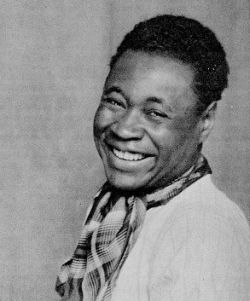
McKay’s work written in Jamaican English serve as an obvious reminder of his heritage, and also as a backbone and inspiration to the later, and perhaps better crafted Creole verse that emerged in Jamaica. Even his work in the United States, however, shows the great influence of his heritage. McKay’s move to the United States marked a transformation in his writing style; he began to model poets from the Renaissance and Romantic period, and also replaced the colloquial tongue of his homeland with Standard English. This revival of his style, however, did not alter his subject choices; and he brought to the Sonnet “the pain, rage, and longings of an Afro-Caribbean immigrant” (Norton 499). Here, he spans a gap between a strict older form and the intense tension created by a life between cultures. His work deals with his feeling of separation from African culture, alienation, and the relations in race and class society. In his first collection, Songs of Jamaica, especially, this relationship, though acknowledged to be problematic, took on an overarching positive light; that “interracial understanding and love were possible”, and that the peasant Jamaicans could learn from their white neighbors (Hansell 132).
In addition, McKay is considered “one of the first [Renaissance style writers] to express the spirit of the New Negro” (Cooper 297); he was already receiving recognition as a fresh voice in African American literature before the Negro Renaissance truly began. Arriving in the United States from Jamaica in his early twenties, McKay found himself unprepared for the great racial tension and blatant prejudice of America- a mindset foreign to his Caribbean and Songs of Jamaica roots. Slowly, McKay began reestablishing himself as a poet, even as he faced the struggles of race riots and the Great Red Scare. Through all this, however, McKay’s work bloomed and expanded, acknowledging with pieces such as If We Must Die both “tragic hopelessness” and “that in Negroes the spirit of human courage remained fully alive” (Cooper 301). This poem in particular had the greatest impact on the Negro world, with its theme resounding in the hearts of his neighbors and in Ernest Gaines’ novel A Lesson Before Dying. His work continually expressed his interest and concern in the Negro interest, especially the difference between the stereotypes of a naïve, childlike race, and his own worldly, educated view.
McKay was unlike the other members of the New Negro movement by nature of his travel and experiences, and yet, he “represented much that was characteristic of the New Negro” (Cooper 305); including his movement from his rural Jamaican hometown to the urban American north, the importance and value of the Negro in his works, and his breaking free of a limited or isolationist mindset. He remained a proponent of the common Negro, the dignity of the culture, and of tensionless relationship between race and class.
Works Cited
Cooper, Wayne. "Claude McKay and the New Negro of the 1920's." Phylon 25.3 (1964): 297-308. Web..
Hansell, William H. "Some Themes in the Jamaican Poetry of Claude McKay." Phylon 40.2(1979): 123-39. Web..
Ramazani, Jahan, Richard Ellmann, and Robert O'Clair. The Norton Anthology of Modern and Contemporary Poetry. New York: W.W. Norton, 2003. Print.
McKay’s work written in Jamaican English serve as an obvious reminder of his heritage, and also as a backbone and inspiration to the later, and perhaps better crafted Creole verse that emerged in Jamaica. Even his work in the United States, however, shows the great influence of his heritage. McKay’s move to the United States marked a transformation in his writing style; he began to model poets from the Renaissance and Romantic period, and also replaced the colloquial tongue of his homeland with Standard English. This revival of his style, however, did not alter his subject choices; and he brought to the Sonnet “the pain, rage, and longings of an Afro-Caribbean immigrant” (Norton 499). Here, he spans a gap between a strict older form and the intense tension created by a life between cultures. His work deals with his feeling of separation from African culture, alienation, and the relations in race and class society. In his first collection, Songs of Jamaica, especially, this relationship, though acknowledged to be problematic, took on an overarching positive light; that “interracial understanding and love were possible”, and that the peasant Jamaicans could learn from their white neighbors (Hansell 132).
In addition, McKay is considered “one of the first [Renaissance style writers] to express the spirit of the New Negro” (Cooper 297); he was already receiving recognition as a fresh voice in African American literature before the Negro Renaissance truly began. Arriving in the United States from Jamaica in his early twenties, McKay found himself unprepared for the great racial tension and blatant prejudice of America- a mindset foreign to his Caribbean and Songs of Jamaica roots. Slowly, McKay began reestablishing himself as a poet, even as he faced the struggles of race riots and the Great Red Scare. Through all this, however, McKay’s work bloomed and expanded, acknowledging with pieces such as If We Must Die both “tragic hopelessness” and “that in Negroes the spirit of human courage remained fully alive” (Cooper 301). This poem in particular had the greatest impact on the Negro world, with its theme resounding in the hearts of his neighbors and in Ernest Gaines’ novel A Lesson Before Dying. His work continually expressed his interest and concern in the Negro interest, especially the difference between the stereotypes of a naïve, childlike race, and his own worldly, educated view.
McKay was unlike the other members of the New Negro movement by nature of his travel and experiences, and yet, he “represented much that was characteristic of the New Negro” (Cooper 305); including his movement from his rural Jamaican hometown to the urban American north, the importance and value of the Negro in his works, and his breaking free of a limited or isolationist mindset. He remained a proponent of the common Negro, the dignity of the culture, and of tensionless relationship between race and class.
Works Cited
Cooper, Wayne. "Claude McKay and the New Negro of the 1920's." Phylon 25.3 (1964): 297-308. Web.
Hansell, William H. "Some Themes in the Jamaican Poetry of Claude McKay." Phylon 40.2(1979): 123-39. Web.
Ramazani, Jahan, Richard Ellmann, and Robert O'Clair. The Norton Anthology of Modern and Contemporary Poetry. New York: W.W. Norton, 2003. Print.
Thursday, April 1, 2010
Janie's Development in Zora Neale Hurston's Their Eyes Were Watching God

Zora Neale Hurston’s novel Their Eyes Were Watching God follows the development of Janie from an naïve adolescent full of dreams to a woman who has seen and walked with the weights of the world. As a young girl, Janie becomes enamored by the idea of love, as seen between the pear tree blossoms and the bees, and she longs for romance- innocently believing it will appear once she is married. This longing for love becomes the driving force behind Janie’s development as a character.

Janie’s grandmother raises her to follow orders and defer to a stronger will, and she tries to create a small, safe world for Janie to live in. Nanny wants Janie to have security, but ends up restricting her dreams; Janie later resents her grandmother for taking the horizon, full of endless possibilities, and pinching “it in to such a little bit of a thing that she could tie about her granddaughter’s neck tight enough to choke her” (89). At sixteen, Janie had “glossy leaves and bursting buds and she wanted to struggle with life but it seemed to elude her” (11). Nanny feared and could not understand Janie’s dreams, and as a result, found her granddaughter stability in a marriage to Logan Killicks.

Before Janie marries Logan, she expects marriage to “compel love like the sun the day” (21), but she soon learns that the life she had imagined for herself is unattainable with Logan. When Janie meets Jody, she believes she has finally found her bee, and she gladly gives up the life she was living to move forward with a man she thought she could love. With Joe Starks, however, life begins to slowly deteriorate. Joe wants Janie to be an ornament he can show off along with his wealth and power, and he bends Janie to his will just as Nanny did. Joe wants Janie to “look on herself as the bell-cow, the other women were the gang” (41), but as a result of his position as mayor, he makes it difficult for Janie to form friendships with the other women. Joe molds Janie into the wife he wants her to be, a soft-spoken shadow to tend the store, and she separates herself into two parts- an outside that she shows Joe and the community, and an inside where she continues to nurture her dreams.
After Joe’s death, Janie begins to enjoy freedom for the first time. When she meets Tea Cake, she does not start a relationship with him because Nanny arranges it, or to escape from an unhappy situation, but because she wants to. Janie blossoms during her relationship with Tea Cake, with him “her soul crawled out from its hiding place” (128). Though their marriage is not perfect, Janie is allowed to be her own person, allowed to talk when she wants to, tell tall tales, or play checkers, and she willingly joins Tea Cake in the fields so they spend less time apart. Together they travel from her home and store in Eatonville, earning money by working the land in the muck. With Tea Cake, Janie enjoys the labor- though Logan Killicks’ attempts to get Janie to work the land with him encouraged her desire to run away. As Tea Cake is struggling with madness, Janie refuses to put him in the hospital because she does not want him to feel abandoned- even though caring for him put her life at risk. After his death, Janie does not want another relationship, she is content to reflect on her love, full with the knowledge that “he could never be dead until she herself had finished feeling and thinking” (193). Janie finds peace because of Tea Cake, but she is strong enough to gather her experiences around her and continue living even after he is gone.
Thursday, March 25, 2010
Can Nick Be Trusted?
Nick, the protagonist of F. Scott Fitzgerald’s famous jazz era noel The Great Gatsby stands as a relatively reliable narrator. Though Nick presents his story along with his opinion, he is enough on the outskirts of the events to see clearly the implications of the actions of those around him. Nick writes of events in the past, which enables him to theoretically change his behavior as to be seen in a better light- but he allows his personal hypocrisies to be seen along side of the others- rendering him more human and relatable. In addition, Nick seems to have an eye for detail and a care for truth that the others around him lack; attributes that add truth to his story and gain him reliability in the eye of the reader.
Nick professes from the start that he is “inclined to reserve all judgments” (1), using this reservation to draw people’s stories from them; and in this manner he presents Gatsby’s story to us. Here, Nick asserts his reliability, acknowledging from the start that he is “privy to the secret grief of wild, unknown men” (1). These secrets are what the reader discovers- for though Nick may withhold judgment, he does not withhold the stories he is told. This compromises Nick’s honesty, just as his association with Gatsby, Tom and Daisy compromises his morality, but does not make him any less reliable as a narrator. The opposite is perhaps more true: as privy to secrets he has no qualms with revealing to us, he becomes more trustworthy as a storyteller.
Nick paints his story successfully to win the reader to his point of view- into liking Gatsby while disapproving of his criminal behavior; and to disliking Tom- but this does not strip away his image of truth. For Nick explains events and character traits while allowing his opinion to lie subtly underneath. The reader is drawn to feel for Gatsby- for his upbringing, his pining love for Daisy and for his unjust murder at the same time that they are led to see Tom’s dishonesty in cheating on Daisy and his careless nature in sending Wilson to Gatsby’s home. Tom’s attitude and the readers’ perception of him are already in place when Nick allows his opinion to sweep through- clearly asserting that Tom, Daisy and the others of their lifestyle “were careless people [who] smashed up things and creatures and then retreated back into their money or their vast carelessness, or whatever it was that kept them together, and let other people clean up the mess they had made” (179). Here, Nick presents a strikingly accurate viewpoint, or judgment, of the Buchanans, but it arrives at the stories conclusion, after the reader has already reached a similar conclusion.
Nick has an eye for the details of people’s characters and a knack for drawing secrets out of those he meets- and he presents these tidbits of information to the reader throughout his story- making his narration more believable. Nick presents himself as a person who withholds judgment and proves this quality by waiting until the noel’s end to give the reader an exact interpretation of his view of his neighbors and family. He and the reader reach the same conclusions- but through the story- not because he tells us how to think.
Nick professes from the start that he is “inclined to reserve all judgments” (1), using this reservation to draw people’s stories from them; and in this manner he presents Gatsby’s story to us. Here, Nick asserts his reliability, acknowledging from the start that he is “privy to the secret grief of wild, unknown men” (1). These secrets are what the reader discovers- for though Nick may withhold judgment, he does not withhold the stories he is told. This compromises Nick’s honesty, just as his association with Gatsby, Tom and Daisy compromises his morality, but does not make him any less reliable as a narrator. The opposite is perhaps more true: as privy to secrets he has no qualms with revealing to us, he becomes more trustworthy as a storyteller.
Nick paints his story successfully to win the reader to his point of view- into liking Gatsby while disapproving of his criminal behavior; and to disliking Tom- but this does not strip away his image of truth. For Nick explains events and character traits while allowing his opinion to lie subtly underneath. The reader is drawn to feel for Gatsby- for his upbringing, his pining love for Daisy and for his unjust murder at the same time that they are led to see Tom’s dishonesty in cheating on Daisy and his careless nature in sending Wilson to Gatsby’s home. Tom’s attitude and the readers’ perception of him are already in place when Nick allows his opinion to sweep through- clearly asserting that Tom, Daisy and the others of their lifestyle “were careless people [who] smashed up things and creatures and then retreated back into their money or their vast carelessness, or whatever it was that kept them together, and let other people clean up the mess they had made” (179). Here, Nick presents a strikingly accurate viewpoint, or judgment, of the Buchanans, but it arrives at the stories conclusion, after the reader has already reached a similar conclusion.
Nick has an eye for the details of people’s characters and a knack for drawing secrets out of those he meets- and he presents these tidbits of information to the reader throughout his story- making his narration more believable. Nick presents himself as a person who withholds judgment and proves this quality by waiting until the noel’s end to give the reader an exact interpretation of his view of his neighbors and family. He and the reader reach the same conclusions- but through the story- not because he tells us how to think.
Tuesday, March 16, 2010
Imagism
One of Ezra Pound’s most famous poems:
In A Station of the Metro
The apparition of these faces in the crowd;
Petals on a wet, black bough.
is heralded as the most important poem of the imagist movement.
His poem strives to capture a moment in time; a snapshot image that captures complexity in its briefness. This glimpse into the everyday prompted my following attempt at imagism:
An Open Window
Echoes of the pounding feet
Pulsing down the silent street
Though not quite as powerfully striking a moment in my personal life, this steals a moment: when passing runners can no longer be audibly heard, but the vibrations of their passing are still familiar. Instead of following Pound into the visual world, this captures an equally important sense. It interests me that these moments or captured seconds revolve most easily around one sense. A poem covering and explaining an experience of many senses would almost break out of the simplicity of the imagist movement by focusing on two or more images in the same moment. And yet, this drawing together of images is exactly what I attempted in the second poem.
Pound was struck speechless by the faces of the metro; he had to stop, to reevaluate over and over again the moment he had seen- and he revived it over and over again until he was satisfied. In this vein, I decided to attempt a similar reevaluation; to break down a longer poem into a shorter fragment the same way Pound did.
Therefore the following poem:
Almost a Rose
blushing pink to softly herald spring
unobtrusive, fragile
she calls to me
a beauty on a bush
and slips her way into my grasp
plucked by an independent hand, and
she is mine
too lovely to leave behind.
I admire her
sweet scent
suede petals, velvet leaf
pearls of dew worn as a string of moons
tracing her thornless stem, curling through my fingers
timeless.
But another enters, unseen
announcing his presence with a crash
a wayward hip, a toppled pile,
tumbling; my startled hand closes
crushes,
sweet scent
and she bleeds in liquid color
a pale watermark stains my skin
was then cut down to these two lines:
Almost a Rose
Blushing pink of spring; plucked, crushed
A pale watermark stains my skin
And this poem, like Pound’s, focuses solely on the visual. The sweet scent, the loud crash, the suede and velvet textures which all help set the scene in the longer poem disappear when confined to a specific moment in time. The second poem is less striking than the longer version; I happen to prefer the scene set in the longer version, but the exercise is interesting by nature of its boundaries.
Sunday, February 28, 2010
Ever Has It Been

Grief is a strange entity for its unpredictability, its tugging, its palpability, its pinpoint. Everyone has felt grief, and everyone has felt joy, but grief is defensible. No one lays claim to other emotions the same way; few are able to admit-especially in the onset of its clutches- that any other has felt this grief. It’s the only emotion where context truly matters, where the grieving can grip their pain with the surety that none other has ever felt the exact same style of grief.
Grief is tailored to us, a worn grey dress. We all own it, we all have worn it, we all pray it stays folded at the bottom of the drawer; and though they’re all of the same cloth, each is cut a little differently. We’ve each embroidered it in our own way.
Grief is fleeting. Not in that it disappears quickly, for even a moment of grief feels like an eternity; but in how it comes and goes. A smell, a memory, a sharp crash- and everything comes flooding back. Grief is an active emotion- it must be remembered to have an impact. The few moments after waking up carry the most bliss for the grieving, for in those groggy seconds, the reasons for a heavy heart aren’t quite to the forefront of the mind.
“
The hearts of my Church, of my family community there, my brothers and sisters, pour out today for the loss of a woman: a mother, a wife, a friend. Her daughter is an integral part of our ministry. So we grieve, they grieve, those closest to the family cry, we all hold our living parents a little closer to our hearts. We all pray for grace like a blanket to cover up that grey. We all know Grief, we know her intimately, and she knows us.
Unique and yet unifying.
So grief is sorrow, it’s bitter, and we never wish for it. When it’s folded softly away, we forget its existence. But as lamentable as the causes of grief, shouldn’t we, as mortal beings, be glad for her at some level?
The loss of something means it once existed, and meant something- and the things that mean something change us and mold us into who we are. Pocahontas, the Disney version, speaks to that:
Pocahontas: It would've been better if we never met. None of this would've happened.
John Smith: Pocahontas, look at me. I'd rather die tomorrow than live a hundred years without knowing you.
Pocahontas: I can't leave you.
John Smith: You never will. No matter what happens to me, I'll always be with you, forever.
Grief is tailored to us, a worn grey dress. We all own it, we all have worn it, we all pray it stays folded at the bottom of the drawer; and though they’re all of the same cloth, each is cut a little differently. We’ve each embroidered it in our own way.
Grief is fleeting. Not in that it disappears quickly, for even a moment of grief feels like an eternity; but in how it comes and goes. A smell, a memory, a sharp crash- and everything comes flooding back. Grief is an active emotion- it must be remembered to have an impact. The few moments after waking up carry the most bliss for the grieving, for in those groggy seconds, the reasons for a heavy heart aren’t quite to the forefront of the mind.
“
“My heart’s broken,” he thought. “If I feel this way my heart must be broken.”
After a while he heard his father blow out the lamp and go into his own room. He heard a wind come up in the trees outside and felt it come in cool through the trees outside and felt it come in cool through the screen. He lay for a long time with his face in the pillow, and after a while he forgot to think about Prudence and finally he went to sleep. When he awoke in the night he heard the wind in the hemlock trees outside the cottage and the waves of the lake coming in on the shore, and he went back to sleep. In the mornings there was a big wind blowing and the waves were running high up on the beach and he was awake a long time before he remembered that his heart was broken.
After a while he heard his father blow out the lamp and go into his own room. He heard a wind come up in the trees outside and felt it come in cool through the trees outside and felt it come in cool through the screen. He lay for a long time with his face in the pillow, and after a while he forgot to think about Prudence and finally he went to sleep. When he awoke in the night he heard the wind in the hemlock trees outside the cottage and the waves of the lake coming in on the shore, and he went back to sleep. In the mornings there was a big wind blowing and the waves were running high up on the beach and he was awake a long time before he remembered that his heart was broken.
”
Ernest Hemingway
Ten Indians
Ernest Hemingway
Ten Indians
The hearts of my Church, of my family community there, my brothers and sisters, pour out today for the loss of a woman: a mother, a wife, a friend. Her daughter is an integral part of our ministry. So we grieve, they grieve, those closest to the family cry, we all hold our living parents a little closer to our hearts. We all pray for grace like a blanket to cover up that grey. We all know Grief, we know her intimately, and she knows us.
Unique and yet unifying.
So grief is sorrow, it’s bitter, and we never wish for it. When it’s folded softly away, we forget its existence. But as lamentable as the causes of grief, shouldn’t we, as mortal beings, be glad for her at some level?
The loss of something means it once existed, and meant something- and the things that mean something change us and mold us into who we are. Pocahontas, the Disney version, speaks to that:
Pocahontas: It would've been better if we never met. None of this would've happened.
John Smith: Pocahontas, look at me. I'd rather die tomorrow than live a hundred years without knowing you.
Pocahontas: I can't leave you.
John Smith: You never will. No matter what happens to me, I'll always be with you, forever.
We hold onto that, as grievers. The idea that those lost are forever with us- even if not in a physical sense.
And somehow, with time, it becomes almost enough.
Wednesday, February 17, 2010
William Carlos Williams
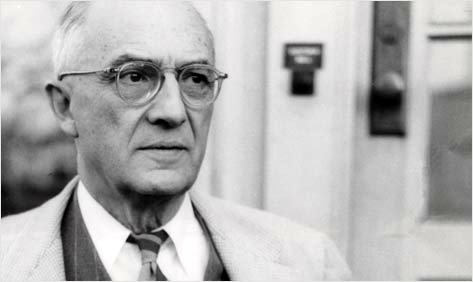
William Carlos Williams helped foster the transition to modern poetry, with a focus on the everyday: on ordinary events, things, people, places, and emotions. Known as a liberator for his imagist poems, Williams’ poetry oftentimes focused on a single object or image so intently that it ceases to be seen as anything less than poetry. This idea can best be portrayed through “The Red Wheelbarrow”, but is also seen in “Danse Russe”, and “The Widow’s Lament in Springtime”.
The Red Wheelbarrow
so much depends
upon
a red wheel
barrow
glazed with rain
water
beside the white
chickens.
upon
a red wheel
barrow
glazed with rain
water
beside the white
chickens.

A wheelbarrow is one of the simplest and most useful elements of a farm, and yet Williams places such exclusive attention on it that the broken sentence is rendered poetic. The deep focus pushes the reader to discover that “the wheelbarrow is not an ordinary object, but is the poem itself” (CCCCD). Williams seems to paint the poem, utilizing line and color to vividly depict the scene: the white of the chickens contrasts the red of the wheelbarrow, which is glazed with water as if a piece of pottery. Just as Williams offers a fresh perspective on a vital tool, rain is used here, as in much of literature, to freshen or make new the image of the wheelbarrow within the poem.
The diction of the poem mirrors its content; as much depends on each word for the function of the poem as on the wheelbarrow for the function of the farm. The stanza breaks and commitment to the image allows a single sentence to become poetry.
Though the wheelbarrow is undoubtedly important, the reader is left to discover why on their own; the wheelbarrow simply sits besides the white chickens, unaware of the stir its rarely applauded significance is causing.
The diction of the poem mirrors its content; as much depends on each word for the function of the poem as on the wheelbarrow for the function of the farm. The stanza breaks and commitment to the image allows a single sentence to become poetry.
Though the wheelbarrow is undoubtedly important, the reader is left to discover why on their own; the wheelbarrow simply sits besides the white chickens, unaware of the stir its rarely applauded significance is causing.
Danse Russe
If I when my wife is sleeping
and the baby and Kathleen
are sleeping
and the sun is a flame-white disc
in silken mists
above shining trees,--
if I in my north room
dance naked, grotesquely
before my mirror
waving my shirt round my head
and singing softly to myself:
“I am lonely, lonely.
I was born to be lonely,
I am best so!”
If I admire my arms, my face,
my shoulders, flanks, buttocks
again the yellow drawn shades,--
Who shall say I am not
the happy genius of my household?
the happy genius of my household?

Every person craves a strange or wild freedom that exists solely, or at least best, when alone and out of sight of societal censure; a werewolf-esque desire that is extrapolated here in a man’s personal expression of happiness. The poem is akin to singing in the shower, a celebration of a moment, a stolen season that exists for one man’s self-discovery and self-admiration.
The diction pushes the meaning of the dance even farther: “If I” begins the poem as a challenge, confident and strong. The sun as a “flame-white disc / in silken mists” emphasizes the idea that this is the picture of a moment, which could end or be concealed at any time. The dance he creates before his mirror is “grotesque”, perhaps a reference to the odd or unnatural positions ballet dancers are trained to execute- the bizarre movements Williams saw while at the Russian ballet could form the basis of his solitary dance. “I am lonely, lonely. […] / I am best so!” could very well be the man’s mantra, as he lives his life by discovering happiness within himself, the “happy genius” and not in outside opinions or events. Here, he is himself in the most exposed and complete form he can be.

The diction pushes the meaning of the dance even farther: “If I” begins the poem as a challenge, confident and strong. The sun as a “flame-white disc / in silken mists” emphasizes the idea that this is the picture of a moment, which could end or be concealed at any time. The dance he creates before his mirror is “grotesque”, perhaps a reference to the odd or unnatural positions ballet dancers are trained to execute- the bizarre movements Williams saw while at the Russian ballet could form the basis of his solitary dance. “I am lonely, lonely. […] / I am best so!” could very well be the man’s mantra, as he lives his life by discovering happiness within himself, the “happy genius” and not in outside opinions or events. Here, he is himself in the most exposed and complete form he can be.
The Widow’s Lament in Springtime
Sorrow is my own yard
where the new grass
flames as it has flamed
often before but not
with the cold fire
that closes round me this year.
Thirtyfive years
I lived with my husband.
The plumtree is white today
with masses of flowers.
Masses of flowers
load the cherry branches
and color some bushes
yellow and some red
but the grief in my heart
is stronger than they
for though they were my joy
formerly, today I notice them
and turned away forgetting.
Today my son told me
that in the meadows,
at the edge of the heavy woods
in the distance, he saw
trees of white flowers.
I feel that I would like
to go there
and fall into those flowers
and sink into the marsh near them.
Sorrow is my own yard
where the new grass
flames as it has flamed
often before but not
with the cold fire
that closes round me this year.
Thirtyfive years
I lived with my husband.
The plumtree is white today
with masses of flowers.
Masses of flowers
load the cherry branches
and color some bushes
yellow and some red
but the grief in my heart
is stronger than they
for though they were my joy
formerly, today I notice them
and turned away forgetting.
Today my son told me
that in the meadows,
at the edge of the heavy woods
in the distance, he saw
trees of white flowers.
I feel that I would like
to go there
and fall into those flowers
and sink into the marsh near them.
Spring generally presents herself as a time of beginnings; of life, and growth, and new buds- and though the plum trees follow their springtime tradition, the Widow only finds misery in flowers that don’t mirror her grief the way the barrenness of winter would. The yellow and red blooms that fill the bushes and cherry trees used to be the joy of the widow and her husband, but now they only remind her of what she has lost. These flowers now “load” their branches as her grief weighs on her heart. The only flowers that do not push old memories onto her are ones she has never seen, trees of white flowers that her son saw at the edge of the meadows and the forest. These flowers offer her an escape, and she craves to take it. Unknown flowers, she feels, would engulf her and take her and allow her to forget long enough to let go and slip unobtrusively into the marsh. Suicide is less of an option surrounded by the bright springtime memories of her own yard.
Williams focuses solely on anguish, and the effect of the emotion on one woman; but her reaction can be generalized and applied to anyone who has suffered loss. Though her lament runs deep and will certainly continue, the reader is offered only one glimpse: as is exists in the moment during the spring.
The images William Carlos Williams creates are vital to his poetry, but beyond that, they are his poetry. His poems take a leap in a new direction, simplifying language in a way that makes the words more poignant- each with its own place and particular significance.

Works Cited
"Explication of The Red Wheelbarrow." Collin County Community College District. Web..
Williams focuses solely on anguish, and the effect of the emotion on one woman; but her reaction can be generalized and applied to anyone who has suffered loss. Though her lament runs deep and will certainly continue, the reader is offered only one glimpse: as is exists in the moment during the spring.
The images William Carlos Williams creates are vital to his poetry, but beyond that, they are his poetry. His poems take a leap in a new direction, simplifying language in a way that makes the words more poignant- each with its own place and particular significance.
Works Cited
"Explication of The Red Wheelbarrow." Collin County Community College District. Web.
Subscribe to:
Posts (Atom)